
Java VS Kotlin: Which is Better for Android Development ?
Kotlin VS Java: Which is Better for Android Development ?

Attention Android developers! If you’re gearing up to create your next big app, you’re probably wondering which language will give you the best results:
Java or Kotlin? This question sparks a lot of debate in the development community, and for good reason.
Both languages have their strengths and weaknesses. Let’s take a closer look at each one and see which might be the better choice for your Android development needs.
The Long and Trusted History of Java :
Java has been around for decades, and in the world of technology, that’s practically ancient. But being old doesn’t mean being obsolete, far from it.
Java is the language that Android was built on, and it’s been the go-to choice for developers since Android’s early days. Here’s why Java still holds its ground:
1. Tried and Tested :
Java is like the foundation of a sturdy house. It’s been tested in countless scenarios, and its reliability is almost unmatched. Developers have been
using it to build Android apps for years, which means you’ll find a vast amount of resources, tutorials, and community support to help you along
the way. If you run into a problem, chances are someone else has faced it before and there’s a solution just a Google search away.
2. High Compatibility:
Java’s compatibility is one of its strongest points. Since so many Android tools and libraries were originally designed with Java in mind, you’ll rarely run into issues when integrating them into your project.
If you’re maintaining an older app or need to use specific libraries that haven’t been updated for Kotlin, sticking with Java might save you a lot of headaches.
3. Strong Performance :
Java isn’t just reliable, it’s also powerful. The language is known for its performance and efficiency, especially in environments where speed and
resource management are critical. If you’re developing an app that needs to run on a wide variety of devices, from low-end to high-end, Java’s performance could be a crucial advantage.
However, Java isn’t perfect. One of the most common complaints is that it’s lengthy, you often have to write a lot of code to accomplish what might
seem like simple tasks. This can make your code harder to read and maintain over time, especially as your project grows.
Kotlin: The Modern Alternative
Kotlin is the newer language on the block, but don’t let its age fool you. Since Google announced in 2017 that Kotlin is officially supported for
Android development, it has quickly gained popularity. Many developers are switching to Kotlin, and here’s why:
1. Concise and Expressive Code
If Java is like writing an essay, Kotlin is like writing a tweet — except you don’t lose any important details. Kotlin’s syntax is much more concise,
meaning you can achieve the same functionality with fewer lines of code. This doesn’t just save time; it also makes your code easier to read and
understand. Less code means fewer opportunities for bugs, and who doesn’t want that?
2. Safe and Modern Features
Kotlin was designed with modern programming practices in mind. It includes features that help prevent common errors, like null pointer exceptions, a notorious issue in Java that can cause your app to crash. Kotlin also supports coroutines, which make it easier to handle tasks like network requests or database operations without blocking the main thread. This leads to smoother, more responsive apps.
3. Works well with Java
One of the best things about Kotlin is that it plays well with Java. You don’t have to rewrite your entire app to start using Kotlin.
You can gradually introduce Kotlin code into your existing Java projects, allowing you to take advantage of Kotlin’s benefits without abandoning
your current work. This interoperability makes the transition to Kotlin much smoother and less risky.
But, like any language, Kotlin has its drawbacks. Because it’s newer, there are fewer tutorials and resources available compared to Java.
If you’re a beginner, this might make the learning curve a bit steeper. However, the Kotlin community is rapidly growing, and more resources are becoming available every day.
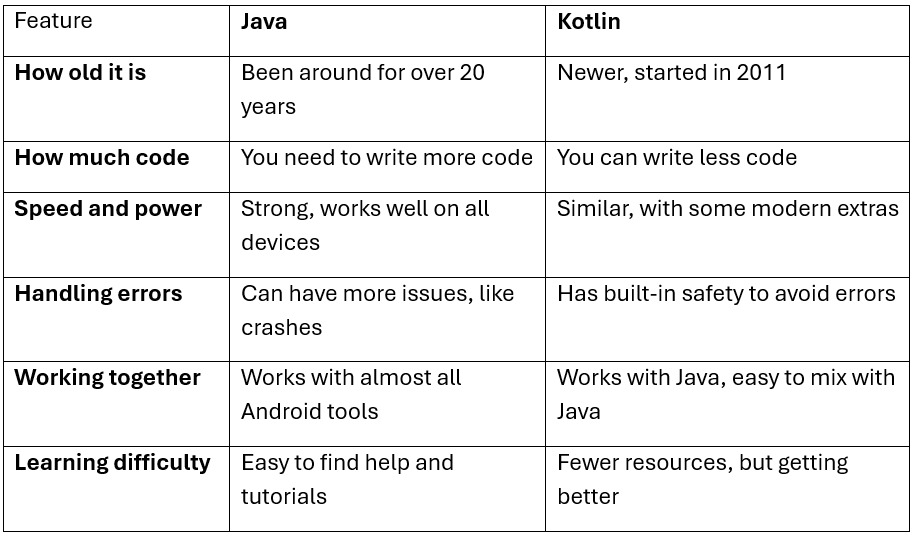
-Comparing Java and Kotlin Side by Side
Let’s break down the differences between Java and Kotlin in a simple comparison:
So, Which One Should You Use ?
This is the million-dollar question, right? Here’s a straightforward answer:
- If you’re starting a new project, Kotlin is probably your best bet. It’s modern, concise, and offers features that make development smoother and more enjoyable. Google’s endorsement of Kotlin as the preferred language for Android development also means it’s likely to stay relevant for years to come.
- If you’re maintaining an existing project or need maximum compatibility, Java is still a strong choice. Its reliability, performance, and extensive community support make it a safe and practical option.
Now it’s your turn! What’s your experience with Java and Kotlin? Have you made the switch, or are you sticking with what you know? Share your thoughts in the comments below, and let’s keep the discussion going !